Cardiopulmonary resuscitation or CPR is an important emergency technique which can save lives when an individual is not breathing or has stopped breathing. CPR training programs are intended to teach people to respond promptly and effectively in the event of a cardiac emergency.
These programs focus on making participants aware of the physical requirements to perform these tasks and the need to recognise emergencies and call for help, and to provide care until professional help arrives, in a systematic way. Knowing the key points of what is taught in CPR training can be a crucial factor in the success of a medical emergency.
Instruction in CPR includes the Following Key Steps:
Identify an Emergency and Take Safety Measures
The most important piece of CPR training is recognising that there is an emergency. Training courses will highlight the need for immediate situation assessment and to determine whether a person is not breathing normally and unresponsive. This is a preliminary evaluation because prompt treatment can make a huge difference in survival rates. Participants are taught to check for responsiveness by gently tapping the person and shouting to see if there is any reaction.
If this doesn’t happen, the next step is to make sure that the environment is safe for both rescuer and victim. Safety is of top concern as entering a dangerous situation may lead to further injuries. If safety has been determined, the rescuer should request assistance, either by yelling for someone to help or by calling for emergency services. This will allow the professional medical team to arrive and assist with CPR.
Maul and our colleagues, we need your assistance
Once unresponsive and scene safe, the next step is to initiate the emergency response system. CPR training courses emphasise calling emergency personnel immediately. Time is often the critical factor, and in many instances, immediate warning can save lives. If anyone is by, one person should call for help while another starts CPR. The Rescuer should use a mobile phone on speaker to call emergency services and begin chest compressions if he/she is alone.
This enables assistance to arrive before delay, but also provides effective action against the insect target. In certain training courses, particularly courses such as Brampton CPR courses, participants are additionally educated on the correct way to supply clear, concise information to dispatchers: the location, the victim’s condition and any care carried out. This communication will assist emergency responders in preparing and arriving equipped and supported.
High Quality Chest Compressions
A fundamental part of CPR is giving good compressions. A considerable amount of training time is spent on hand placement, compression depth and compression rate. The aim is to have the blood pumped by hand through the heart and into the vital organs, particularly the brain, until normal heart function is restored or specialist medical assistance reaches them.
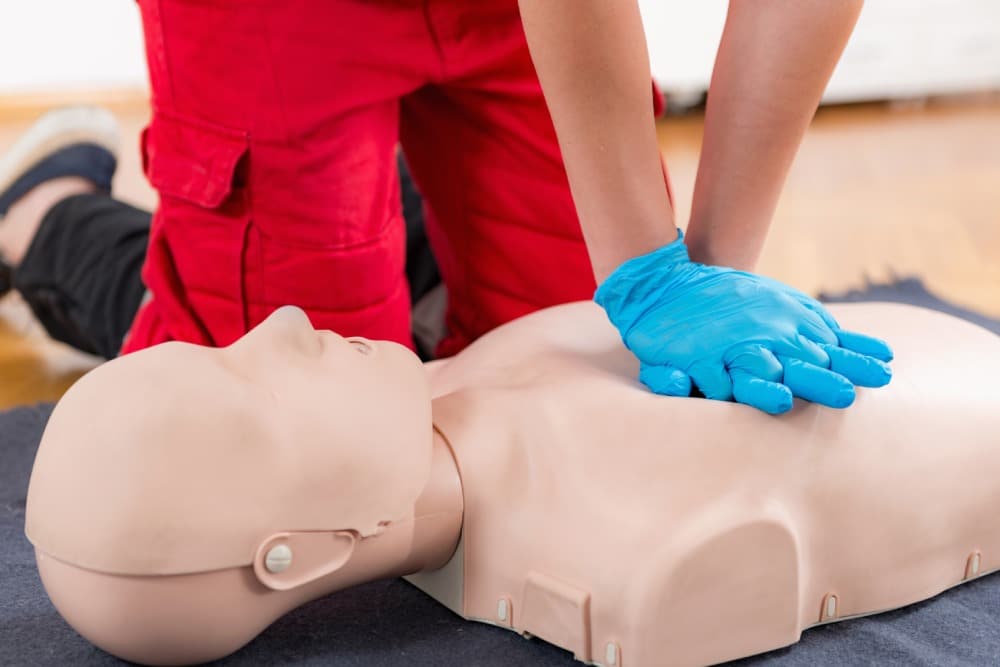
Participants practice compressing the chest 100-120 times a minute, at least 2 inches deep, using the heel of one hand placed on the middle of the victim’s chest with the other hand interlaced and the compression force provided by the participant’s body weight.
The correct technique will ensure the maximum blood flow and reduce the risk of injury. The trainees are also instructed to let the chest expand between compressions, so that the heart can refill with blood. The importance of good compressions is stressed—they have the greatest impact on survival in adult CPR.
Administering rescue breaths and airway management
CPR training also includes the value of rescue breathing in drowning, drug overdose and pediatric emergencies, in addition to compressions. They are instructed in the head-tilt/chin-lift technique and checking for obstruction. When the airway is clear, rescuer pinches the victim’s nose, seals the mouth and gives two slow breaths, observing for a rise of the chest. It is important to have good ventilation to allow the lungs to receive oxygen, and it is important that it is circulated by the chest compressions.
Proper use of barrier devices (face shields or pocket masks) to minimise the risk of disease transmission is also included in training. Hands-only CPR is encouraged for untrained rescuers or when rescue breathing is not feasible, but full CPR training means participants will be ready to perform full CPR when necessary.
The use of an Automated External Defibrillator (AED)
One of the major aspects of the modern CPR training is the automated external defibrillator or AED. These machines are used to monitor the heart’s rhythm and even give a shock when needed to re-establish a normal rhythm. Training includes teaching participants how to rapidly access and operate an AED – turn it on, attach the pads to the victim’s bare chest, and follow the device’s instructions. It is a very simple process, but it takes confidence and experience to effectively use it.
Participants are taught the importance of using AEDs as soon as they are available because the sooner they are used in a sudden cardiac arrest, the greater the survival rate will be. Training also includes safety measures, including ensuring that no one is touching the victim while the shock is being delivered and that there is no metal object or wet clothing in the way of the shock delivery.
The Importance of Continuous Practice
CPR skills can deteriorate over time if not practised regularly. Training programs highlight the importance of regular practice and recertification efforts to ensure that they remain proficient. By practising on manikins, participants can build up their muscle memory for positioning hands, depth of compression, and correct ventilation technique.
Many programs have refresher courses at least once every two years to keep skills sharp and to make sure that participants are current with guidelines. Practice also develops confidence and will lead to individuals taking action in real emergencies quickly and effectively.
The Ability to Remain Calm and Emotionally Ready When Dealing with CPR Situations
Handling a cardiac emergency can be an emotional experience. CPR training courses cover the psychological issues associated with the provision of life-saving care, teaching students how to manage stress, fear and anxiety when dealing with moments of critical decision making.
Trainees are taught coping mechanisms, including paying attention to the steps of CPR and using their training to inform their actions. Emotional preparation is important so as you are not left with mental strain and unable to provide quality care, particularly if you are not sure of the outcome or if the victim is a member of your family or friend.
Conclusion
CPR training programs can help people learn the skills and gain the knowledge they need to be able to respond during cardiac emergencies. These programs educate on critical elements of emergency recognition, safety measures, calling for help, high-quality chest compression, rescue breathing, and the use of an AED, equipping participants with the skills needed to make a difference in a time of crisis.
With continued practice and emotional readiness, the capacity to provide life-saving care is further strengthened. CPR training also benefits the community, with trained individuals who can make a difference in a crisis situation. These skills can help save the life of a person who is a victim of a fire and can help make a person feel more prepared and responsible if they ever become a victim of a fire.